
Estate & Personal Documents
How to Get a Trust Document Notarized in New Jersey
By Tawana Harris ·
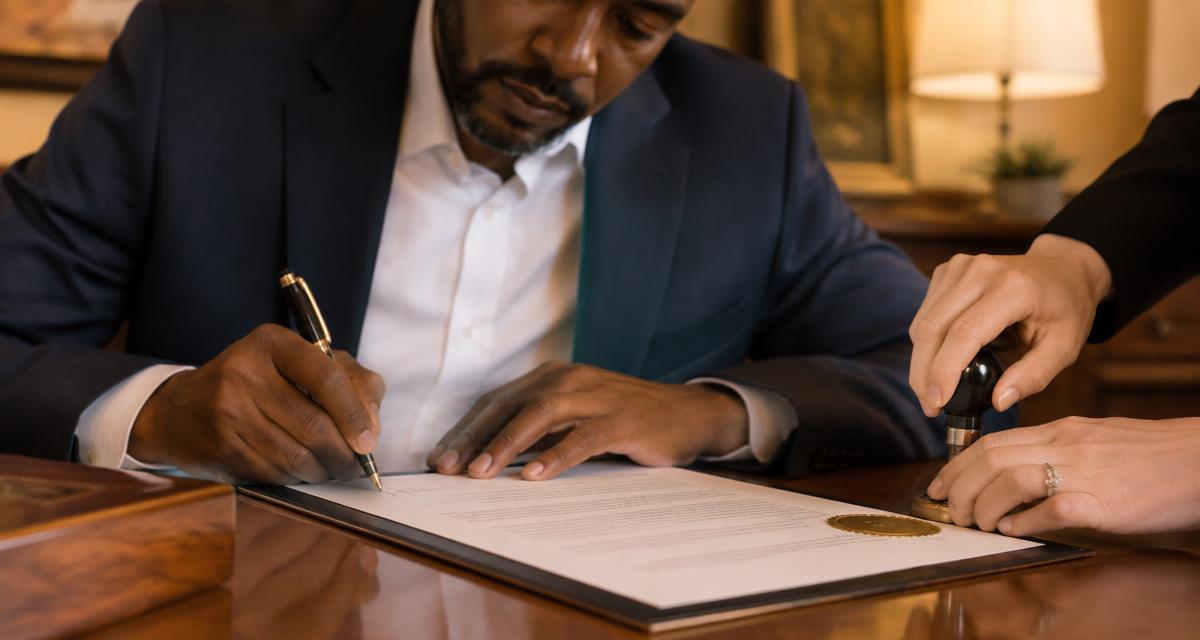
Trusts come in many forms, from revocable living trusts to trusts created to manage assets for a family member. Whether a trust document must be notarized, and what form that notarization should take, depends entirely on the trust document itself and the attorney or institution that prepared it or will rely on it.
This guide explains what happens during a trust signing appointment and where a notary's role begins and ends.
The notary's role in a trust signing
When a trust document includes a notarial certificate, the notary's job is to confirm the identity of each person signing, witness the signature, and complete the certificate accordingly, whether that is an acknowledgment or a jurat. Trustees, grantors, and any other required signers must each personally appear and sign in the notary's presence if the certificate calls for a jurat.
The notary does not decide what type of notarial act the trust requires, does not review the trust's terms, and cannot advise on how the trust is structured or funded. Those decisions rest with the attorney who drafted the trust.
Amendments and related documents
Trusts are often updated over time through amendments, restatements, or certifications of trust used to prove the trust's existence to a bank or title company. Each of these documents may need its own notarization, and the requesting party or your attorney will specify what is required.
- Trust agreements and restatements
- Trust amendments
- Certifications or affidavits of trust for banks and title companies
- Powers of attorney granted by or to a trustee
What to bring to the appointment
- The complete trust document or amendment, unsigned if a jurat is required
- Valid, unexpired government-issued photo identification for each signer
- Confirmation from your attorney of which notarial act the document requires, if you are unsure
A notary cannot supply or correct notarial certificate wording that is missing from a trust document. If the document has no certificate, check with the attorney or institution that requested it before your appointment.
Coordinating multiple trustees or grantors
Some trusts have co-trustees or multiple grantors, all of whom may need to sign. Each person must personally appear before the notary; no one can sign on another person's behalf. A mobile notary can often accommodate everyone in a single visit if they are able to gather in one location, or arrange separate appointments if not.
- Does every trust document require notarization?
- Not necessarily. Whether notarization is required depends on the specific document and how it will be used; your attorney or the receiving institution can confirm this.
- Can a notary tell me if my trust is set up correctly?
- No. A non-attorney notary cannot review or advise on the terms of a trust. That review should come from your attorney.
- Can a trustee sign a certification of trust without the other trustees present?
- That depends on how the trust and the certification are drafted. Confirm the signing requirements with your attorney before the appointment.
- What if the bank needs a specific notarial certificate wording?
- The bank or title company should provide the required wording; the notary can complete it but cannot draft it for you.
Describing the document when you schedule
When booking a trust signing, it helps to say what type of document is involved, such as a trust agreement, an amendment, a restatement, or a certification of trust for a bank or title company, and how many trustees or grantors need to sign. Certifications of trust are often shorter than the full trust agreement but still require the same care with identification and appearance rules.
If the trust signing is happening alongside other estate documents, such as a pour-over will or powers of attorney, mention that as well so the appointment can be scheduled with enough time for every notarial certificate that needs to be completed.
When a trustee is unwell or unavailable
Trust signings sometimes need to happen quickly when a grantor is in poor health or in a care facility. A notary can travel to a hospital or facility anywhere in New Jersey, but the signer must still be able to understand what they are signing and must be signing willingly. If a co-trustee or grantor cannot be present in New Jersey at all, that limitation should be raised with the attorney who drafted the trust, since a notary cannot notarize a signature made outside their presence.
Why a trust signing might not go forward as planned
- The trust document or amendment has blank pages or missing exhibits
- A certification of trust has no notarial certificate attached
- A required co-trustee or grantor is missing from the appointment
- A signature was made before the notary arrived, on a document that required a jurat
- Identification presented does not match the name of the trustee or grantor on the document
Because banks and title companies are often strict about how a certification of trust must read, it is worth confirming the exact wording they require before the appointment, rather than discovering a mismatch when the document is submitted afterward.
Storing the signed trust documents
Once signed, the notary's certificate will show the date, the type of notarial act performed, and the notary's commission details, and the transaction will be recorded in the notary's journal of notarial acts. The signed original trust and any amendments should be kept together in a safe, known location, since institutions may ask to see the original or a certified copy when the trust is used. If an attorney prepared the trust, providing them a signed copy for their file can help if questions come up later.
Scheduling a trust signing
Signed By Love Levon Notary Services meets clients across New Jersey for trust signings, amendments, and related paperwork, Monday through Saturday from 8:00 AM to 8:00 PM and by appointment on Sunday. Request an appointment through the contact form to schedule your signing.
This information is provided for general educational purposes and is not legal advice. A Notary Public cannot provide legal advice unless separately authorized to do so.
Need a Notary in New Jersey?
If you need professional Notary services, we're here to help. Contact us to ask about availability and schedule your Notary appointment.
Related notary services
Related guides
- How to Get a Will Notarized in New JerseyClarifies the difference between witnessing and notarizing a will, and how a notary supports the self-proving affidavit.
- How to Get a Power of Attorney Notarized in New JerseyA clear walkthrough of what New Jersey notaries can and cannot do when you need a power of attorney signed.
- How to Get Estate Documents Notarized in New JerseyAn overview of how notarization supports common estate administration paperwork after a loved one passes.